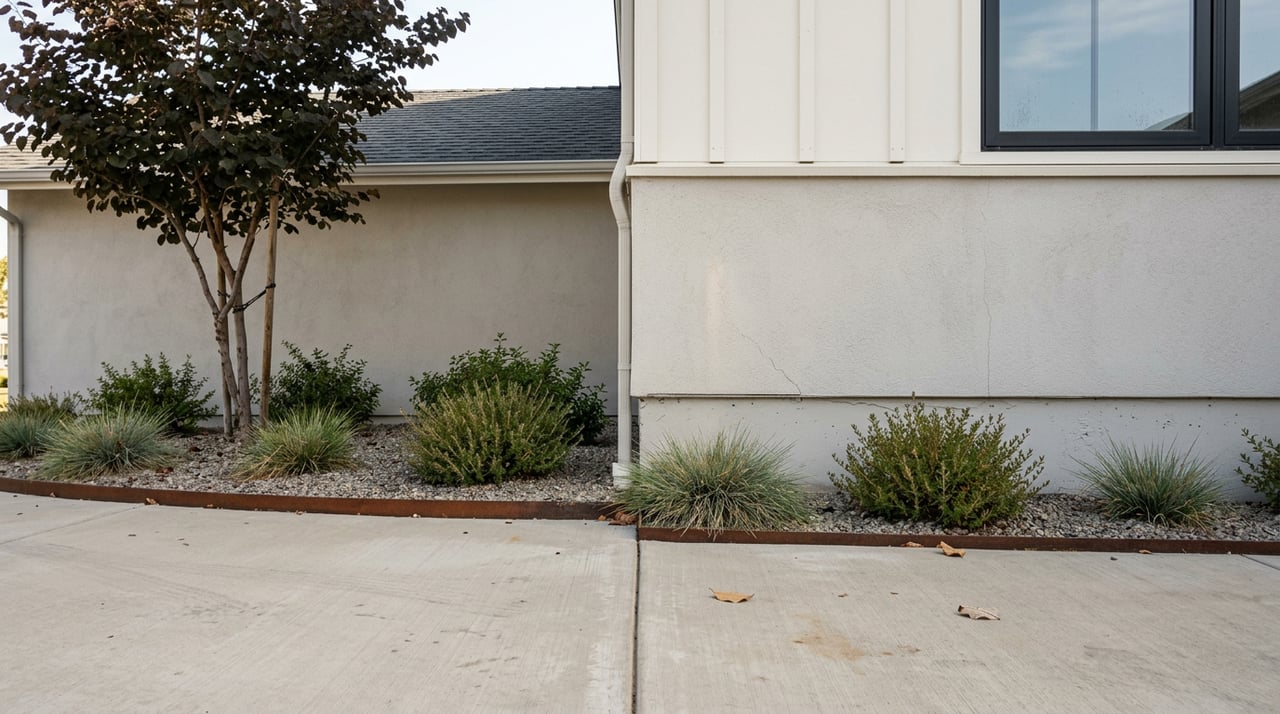
I've sat across the table from more than one Rocklin seller staring at an inspection report that flagged something they never expected. Not a leaky roof. Not dated appliances. A hairline crack the inspector traced straight to the ground the house sits on, or a supply line material that triggered an automatic callout before the inspector even turned on a faucet. Both surprises trace back to the same thing: the rock underneath the city, and the specific decade a specific tract went up on top of it.
Most sellers walk into a listing appointment with a simple mental model. Older home, more inspection risk. Newer home, fewer surprises. That model works fine in a lot of Sacramento suburbs built on flat alluvial soil. It works less well in Rocklin, and understanding why changes how you should prepare a home here before it ever hits the market.
The Age Assumption That Doesn't Hold Here
In a typical suburb, the logic is straightforward. A house from 1985 has had four decades of settling, aging pipe, and deferred maintenance to accumulate problems. A house from 2015 hasn't. Price it, prep it, and move on accordingly.
Rocklin breaks that pattern in a specific way. Foundation repair contractors working the city describe two distinct failure modes rather than one age-linked curve: older properties near central Rocklin and Pacific Street tend to show long-term settlement and aging materials, while newer homes in developments like Whitney Ranch and Stanford Ranch are often still dealing with soil that hasn't fully settled after construction, producing movement tied to grading and compaction rather than age. A 2005 build and a 1985 build can both end up with a foundation flag on inspection day, just for opposite mechanical reasons.
What The Bedrock Actually Does
The reason both mechanisms exist at once traces back to what's under the topsoil. Rocklin sits on granite bedrock, the same rock that gave the city its name and fueled a quarrying industry that opened its first pit in 1863 and, at its peak, ran more than 60 separate quarries in a stretch of land less than a mile square. That granite went into the Central Pacific Railroad and the California State Capitol building. Quarry Park Adventures, one of the city's best-known recreation spots, sits inside a former quarry pit.
In much of Rocklin, that bedrock sits close enough to the surface that contractors digging footings hit it just a few feet down. Above it, the soils skew clay-heavy, and clay behaves differently than sand or loam: it swells when it holds winter rain and shrinks again through the dry summer. That expansion and contraction cycle is the mechanical driver behind cracked flatwork, leaning retaining walls, and foundation stress across the city. It doesn't care how old the house is. It cares how the clay above the rock is moving that particular year, and how the home's footings were designed to handle it.
Put those two facts together and the age-doesn't-predict-risk pattern makes sense. A shallow, hard rock layer under a shifting clay cap creates uneven support conditions no matter when the slab went in. The variable that matters more than age is which soil zone and which construction era a given tract sits in.
| Corridor | Typical construction era | Common inspection pattern | 2026 price range |
|---|---|---|---|
| Sierra College corridor | 1970s to 1980s | Long-term settlement, aging materials | $475,000 to $575,000 |
| Stanford Ranch | 1990s to 2000s | Grading-related settlement, era-specific plumbing | $550,000 to $750,000 |
| Whitney Ranch and Sunset West | 1990s to 2000s | Post-construction soil adjustment | $600,000 to $800,000 |
The Detail That's Specific To One Tract: Stanford Ranch's Early-1990s Pipe
Inside that Stanford Ranch column sits a detail generic inspection checklists don't catch because it's specific to a construction window, not a whole city. Many Rocklin homes built in the early-to-mid 1990s, and Stanford Ranch in particular, were plumbed with polybutylene supply pipe. It was a common, code-approved material at the time. It's also a material with a documented pattern of internal deterioration, and it's one that an inspector or a plumber can usually identify on sight, which means it surfaces during escrow whether a seller mentions it or not.
If your home falls in that specific tract and construction window, this isn't a maybe. It's a known material characteristic of the era, and buyers' inspectors in this market know to look for it. Finding out during your own pre-listing walkthrough beats finding out from a buyer's inspection report with a repair credit already attached to it.
A crack that shows up once during a wet January is weather. A crack that reopens every winter for three years running is the foundation talking.
What The Repair Numbers Mean If You're Listing
Foundation repair in Rocklin typically runs $8,000 to $45,000, with the average project landing closer to $26,500, depending on how much of the perimeter needs support and which pier method the job calls for. Given the shallow bedrock, contractors most often turn to concrete piers for standard slab work, reserving steel piers driven to bedrock or refusal for heavier structural jobs. None of that is useful information until you can recognize the early signs yourself, before a buyer's inspector puts them in writing during your contingency period.
The warning signs contractors flag most often in Rocklin homes are consistent enough to watch for directly:
- Diagonal cracks above doors and windows
- Doors and windows that suddenly stick
- Gaps opening between trim and ceilings
- Sloping or bouncy floors
- Visible cracks in exterior brick
Most Rocklin homes sit on short crawl space foundations with cripple walls rather than full basements, so a lot of this is visible without specialized equipment. If you notice more than one of these signs together, that's the moment to call a contractor, not the moment to hope a buyer's inspector misses it.
Timing The Market Around What Bedrock Buys You
As of August 2026, Rocklin homes are listed at a median of $750,000, around $330 a square foot, with a typical listing spending 56 days on the market. That citywide median flattens a real spread. Break it into the construction corridors above and the picture sharpens: homes zoned to Whitney High School carry a further $25,000 to $50,000 premium over comparable properties elsewhere in the city, on top of the corridor pricing itself.
Timing matters as much as pricing. During the March-through-August selling season, well-prepared homes here typically go pending in 20 to 35 days. List between November and February instead, and expect 15 to 25 additional days on market while buyer traffic drops by roughly half. Foundation contractors also point to summer and early fall as the season when repair work holds up best, since the clay is neither fully saturated nor at its most contracted. If your home needs foundation attention before listing, the calendar rewards handling it during the summer portion of the buyer season, when repairs also hold up best.
Get Ahead Of It Before A Buyer's Inspector Does
California's disclosure law is relevant when preparing to sell. A defect discovered by the seller ahead of time and disclosed on paper is a very different negotiation than the same defect discovered by a buyer's inspector mid-escrow. Before you list a Rocklin home, a few steps are worth doing in order:
- Confirm the build year and tract, and match it against the era table above.
- If the home is in Stanford Ranch and dates to the early-to-mid 1990s, have a plumber visually confirm the supply line material before a buyer's inspector does it for you.
- Walk the home for the specific warning signs (cracked stucco, sticking doors, sloped floors) rather than waiting for a general inspection to find them first.
- Schedule any needed foundation work in summer or early fall, when repairs hold up best and the summer portion of the buyer season is still active.
- Price against the corridor and school-zone data above rather than a single citywide median.
FAQ
Does every Rocklin home from the 1990s have polybutylene pipe? No. The pattern is specific to homes built in the early-to-mid 1990s, with Stanford Ranch as the tract most commonly cited. Confirming your home's exact build year and neighborhood is the only way to know for certain.
Is shallow bedrock a problem or an advantage? Both, depending on what you're doing with the property. It provides a stable base for footings once a foundation is properly designed for it, but it also means the clay soil above it has nowhere to drain vertically, which concentrates seasonal swelling and shrinking right at the foundation level.
When is the best time to get a foundation checked before listing? Summer and early fall, when the clay soil is neither saturated from winter rain nor at its most contracted from the dry season. That timing overlaps with part of Rocklin's peak March-through-August buyer season.
If you're weighing whether your Rocklin home is ready for the market, or want a straight read on how its specific construction era and micro-market stack up against current pricing, Rajan George combines a finance background with hands-on property assessment to help you get ahead of what an inspection will find, not just react to it. Get Your Free Home Valuation to see where your home stands before a buyer's inspector tells you.
This article is general information, not legal, tax or financial advice. Consult a qualified professional about your situation.